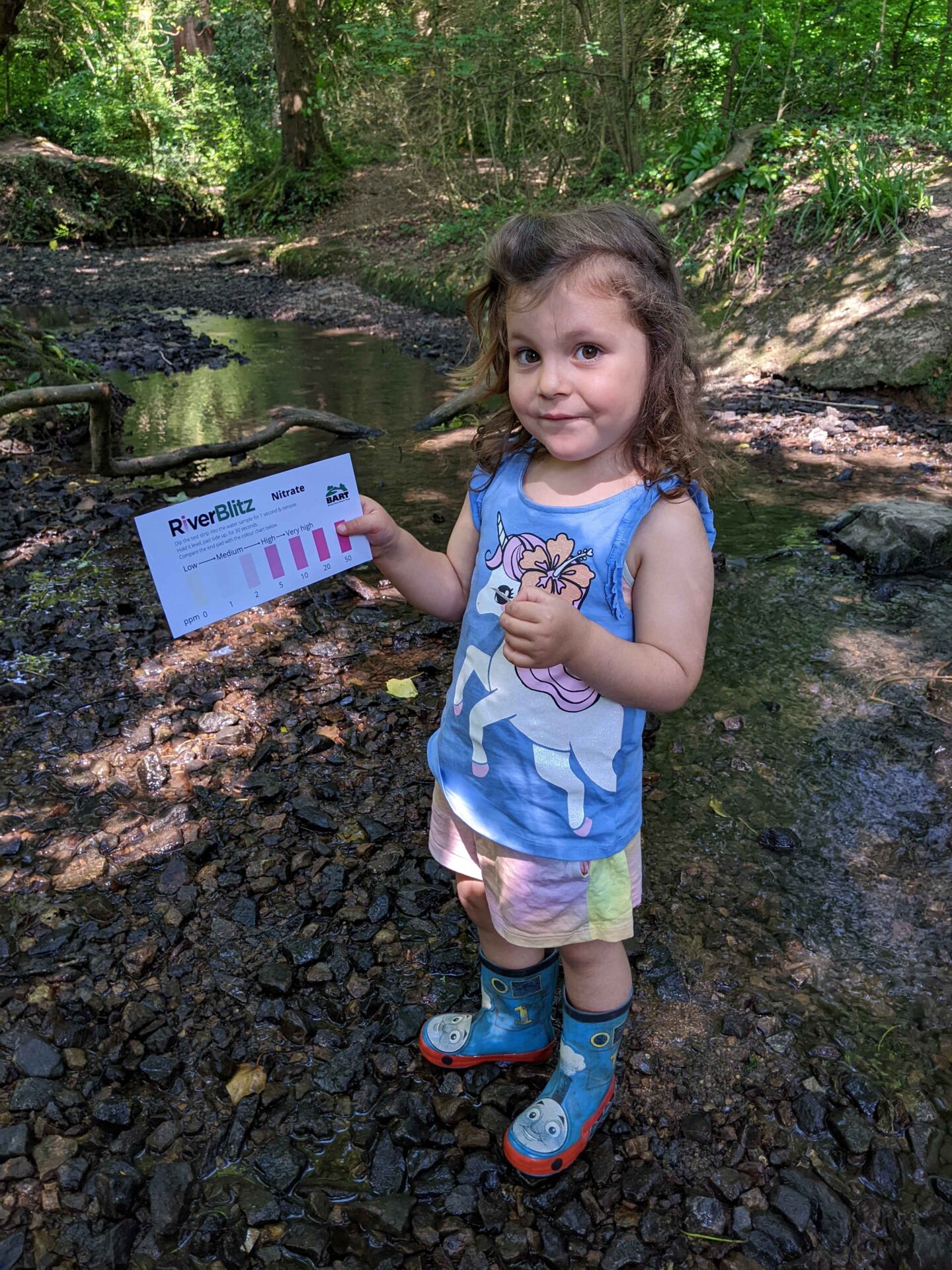
Healthy rivers are vital to our communities. They support wildlife, help us adapt to climate change, improve our wellbeing, and strengthen local economies. Safeguarding these waterways for the future can only be achieved by working together, and Bristol Avon Rivers Trust (BART) has been promoting this through our annual Bristol Avon RiverBlitz.
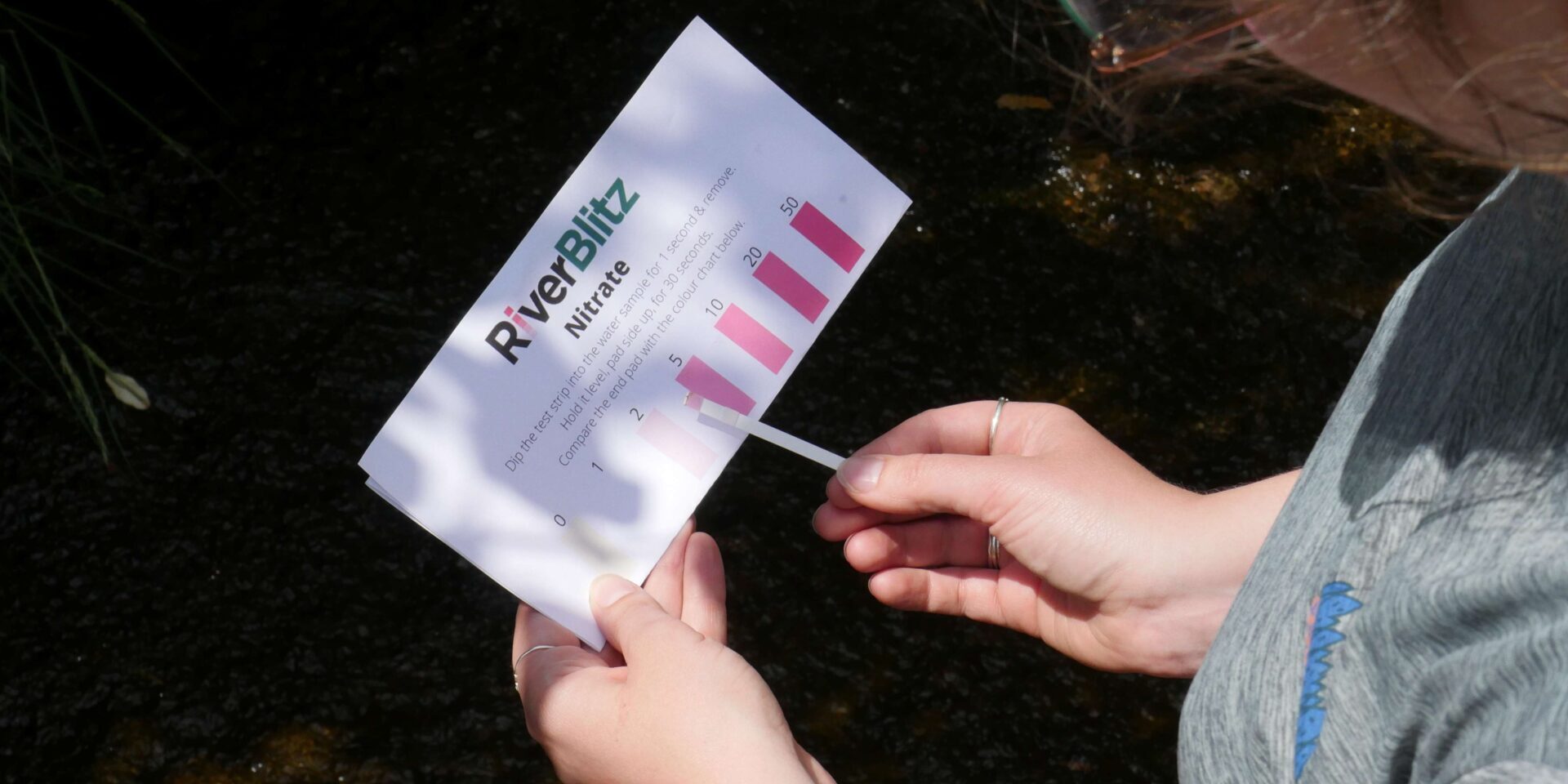
This summer, between 4th and 14th July, the Bristol Avon RiverBlitz saw 303 volunteers collect 267 water samples from across the catchment. Using simple testing kits, participants tested nutrient levels, an important component of water quality. The results from 2025, and every year since 2016, can be viewed on BART’s online RiverBlitz Data Explorer map. These results help build a clearer picture of the health of our rivers and the pressures they face.
Tracking Nutrient Pollution
Bristol Avon RiverBlitz volunteers test nitrate and phosphate levels in our rivers. These nutrients enter rivers from a range of sources including agricultural fertilisers and manure, sewage discharges, urban run-off, and common household products such as detergents.
Excess nutrients can trigger rapid growth of plants and algae. This reduces oxygen in the water, blocks sunlight, and can suffocate fish and other aquatic life. The impacts extend beyond nature: nutrient pollution can damage farming and fisheries, reduce opportunities for recreation and tourism, lower property values, and even pose risks to public health. Tackling nutrient pollution is therefore essential for both ecological health and community wellbeing.
What Did We Find in 2025?
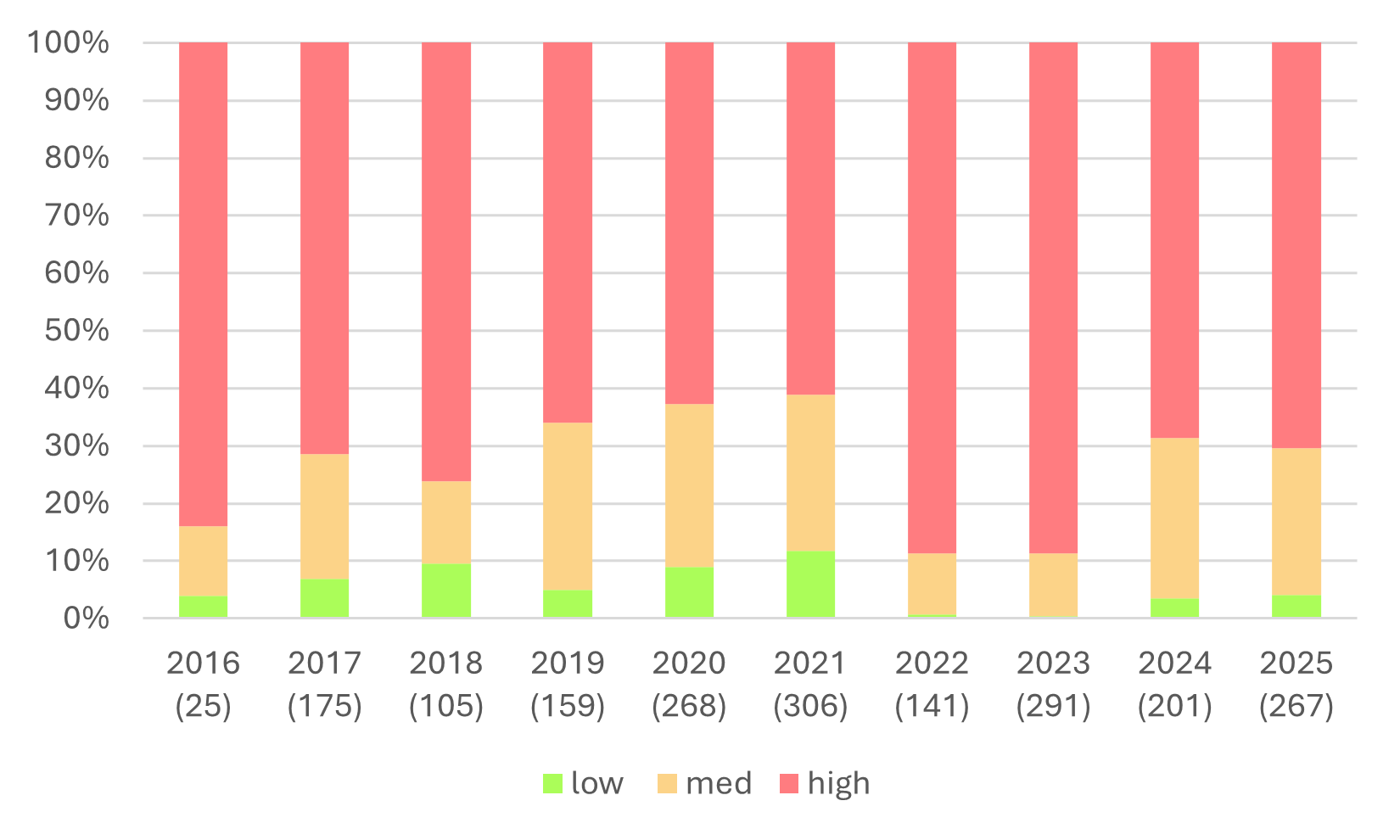
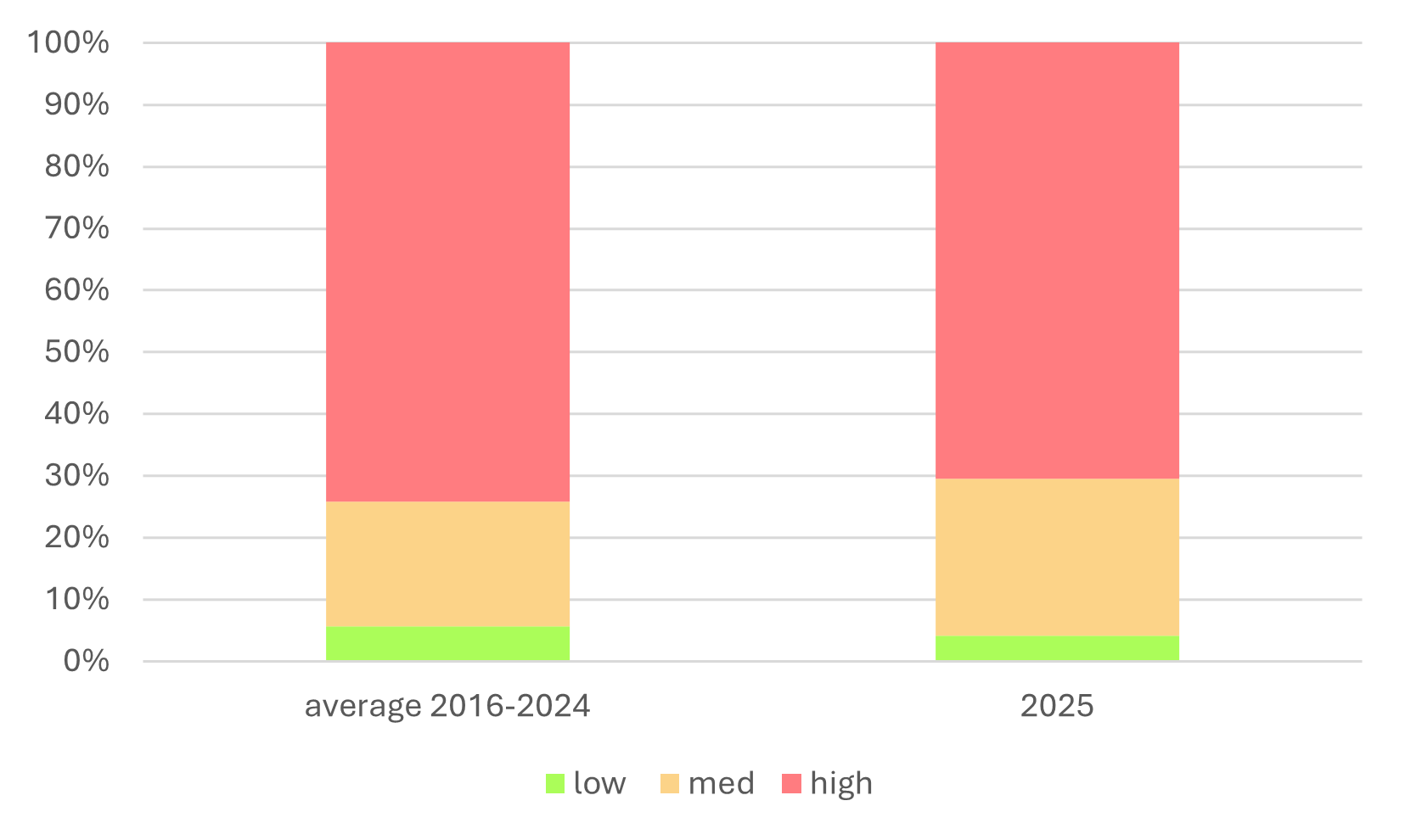
The annual Bristol Avon RiverBlitz provides a snapshot of water quality in the rivers and streams in the Bristol Avon catchment during July. This year, results showed that 70% of sites sampled had high levels of nutrients. This was just below the average (2016-2024) of 74% of sites having high nutrients and similar to last year’s 69%. Interestingly, nitrate levels were lower than average and phosphate levels were higher (see below for more detail). After prolonged dry weather up to the Bristol Avon RiverBlitz week at the start of July, river levels were low and nutrients may have been more concentrated in the low volume of water in our rivers. On the flip side, little rain will have meant less nutrients were being washed off farmland and there will have been less sewage overflow events, which could mean fewer nutrients entering the rivers at this time. Now that we have had heavy rainfall (September 2025), more nutrients will have entered our rivers, and unfortunately because river levels are still low nutrient levels could now be even higher.
Percentage of sites with high, low or medium nutrient levels each year of RiverBlitz
The average nutrients levels (2016-2024) vs 2025 results
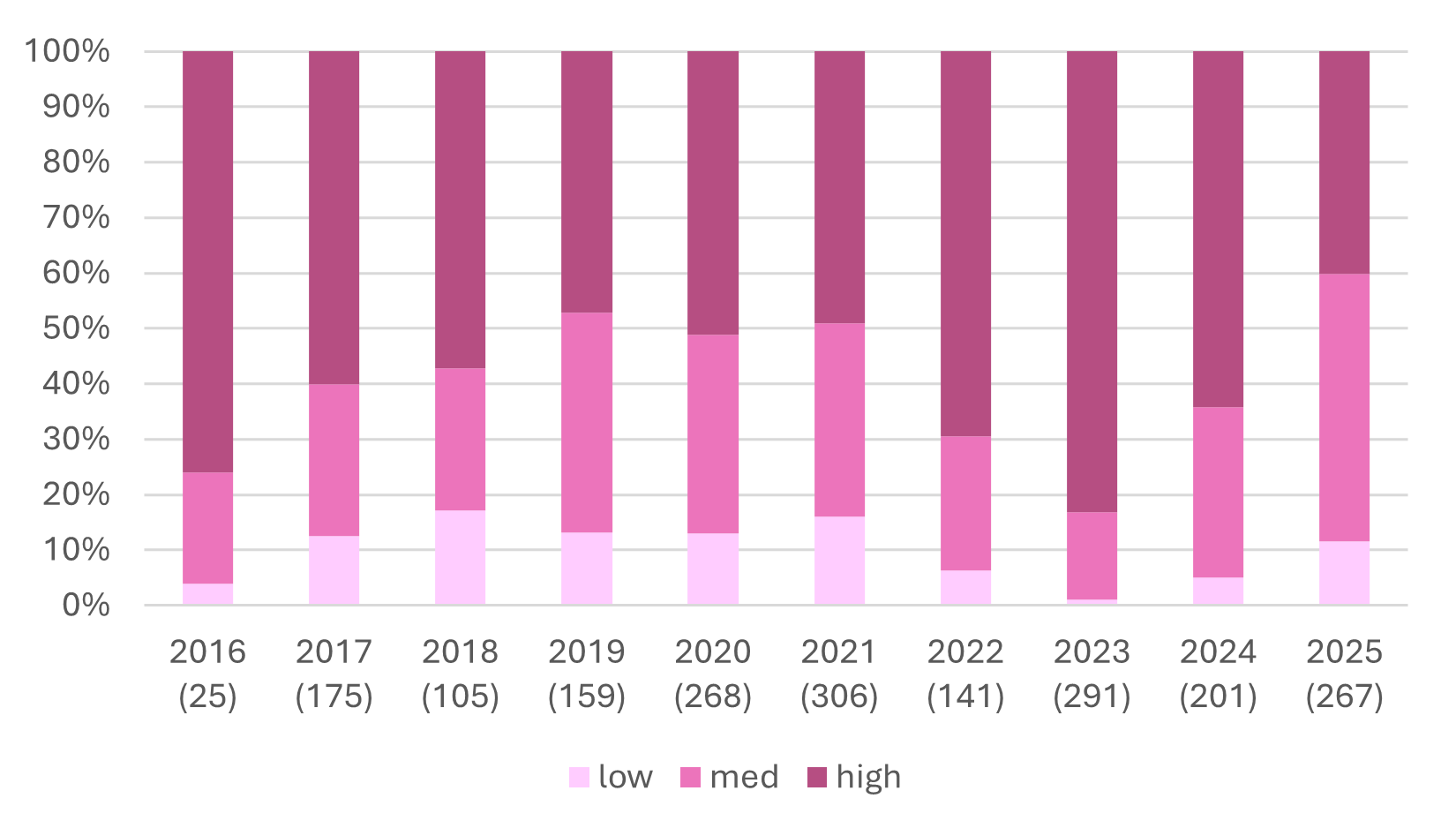
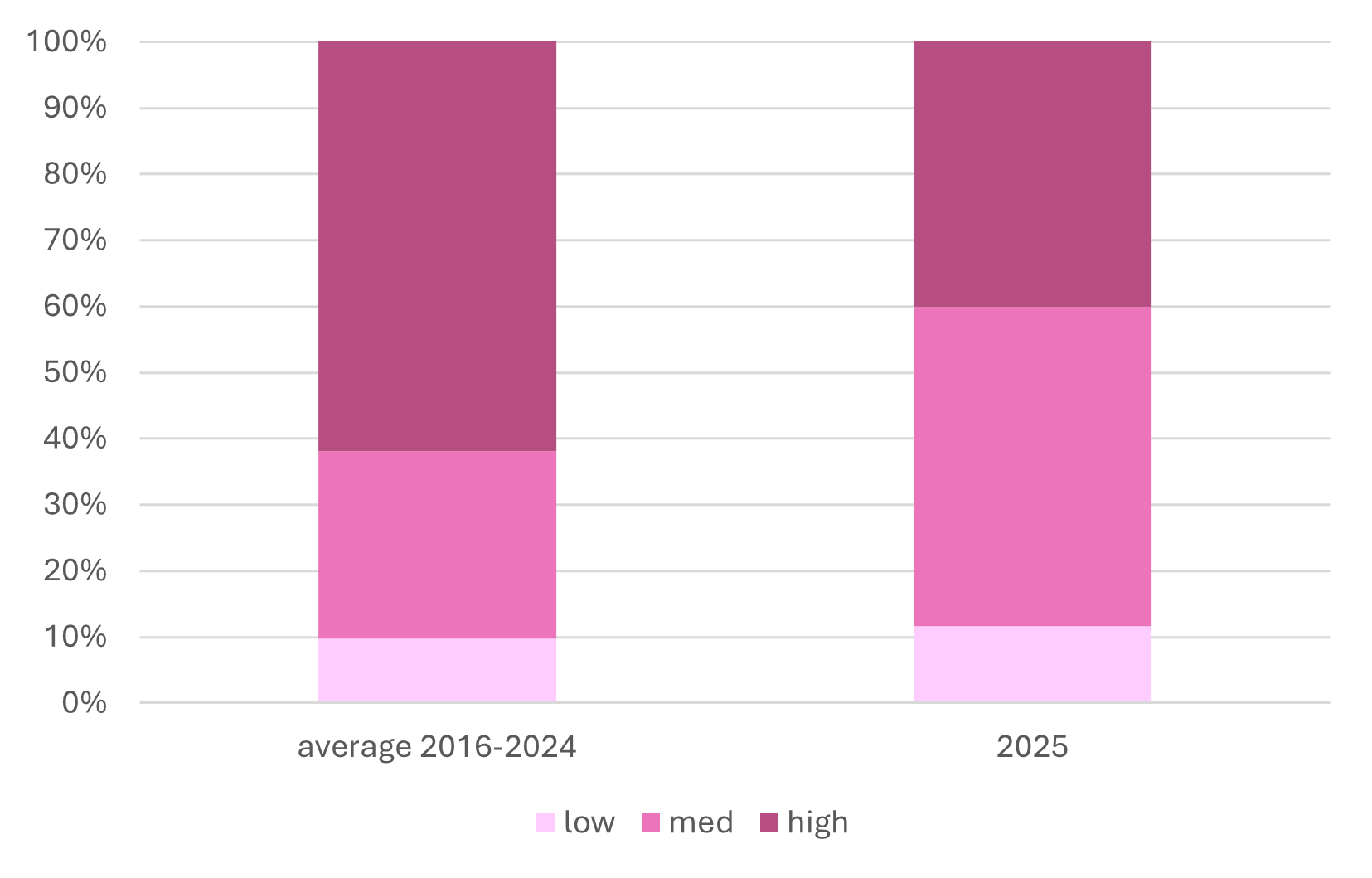
- The percentage of sites with high nitrate fell sharply, from 64% in 2024 to 40% in 2025, and was well below the average (2016-2024) of 62%.
- Although fewer sites had high nitrates, the number of sites with low nitrates was around average with 13% having low nitrates in 2025 compared to the 10% average.
- Weather may have played a role: the hot and dry summer of 2025 could have reduced surface runoff and leaching, limiting the amount of nitrogen washed into rivers compared with wetter years.
Percentage of sites with high, low or medium nitrate levels each year of RiverBlitz
The average nitrate levels (2016-2024) vs 2025 results
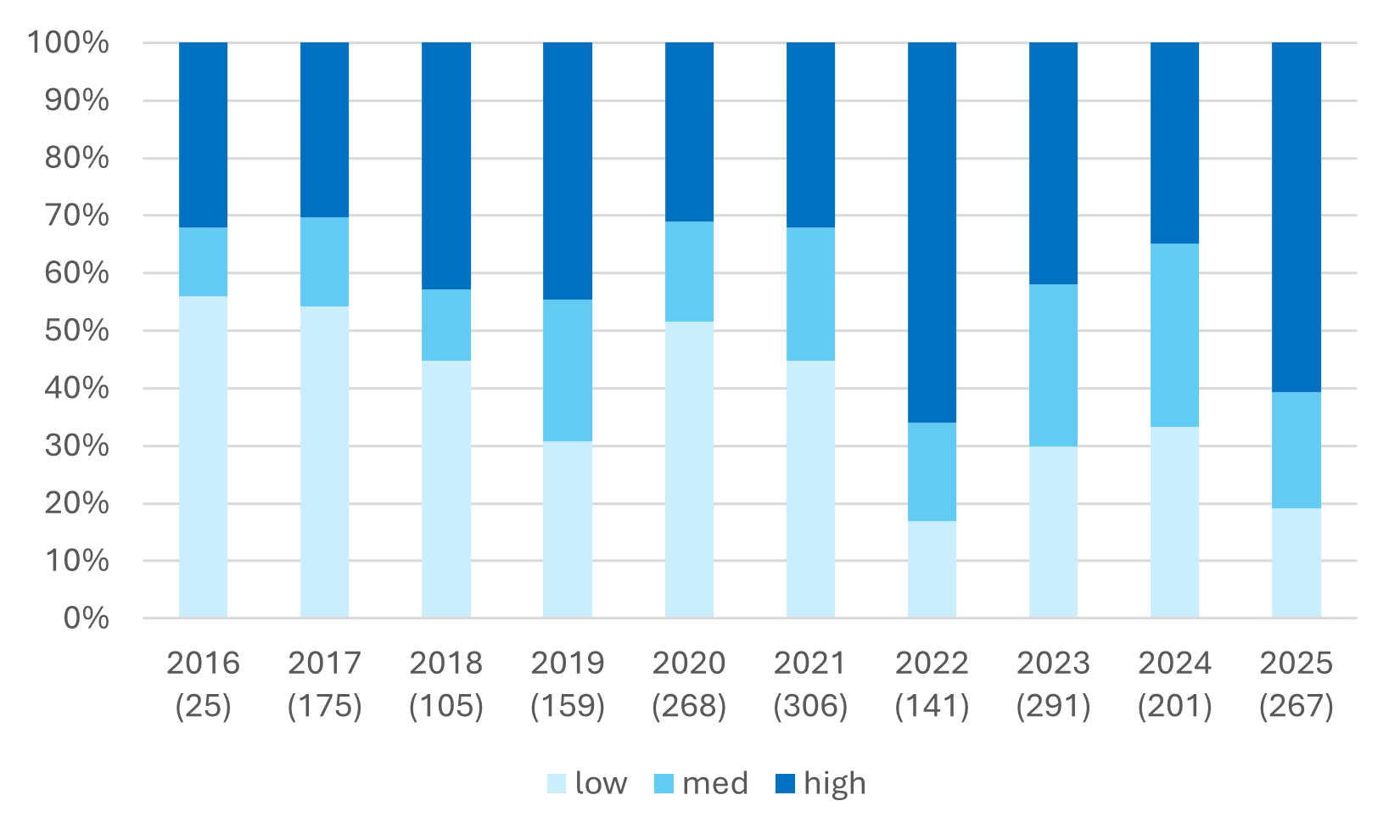
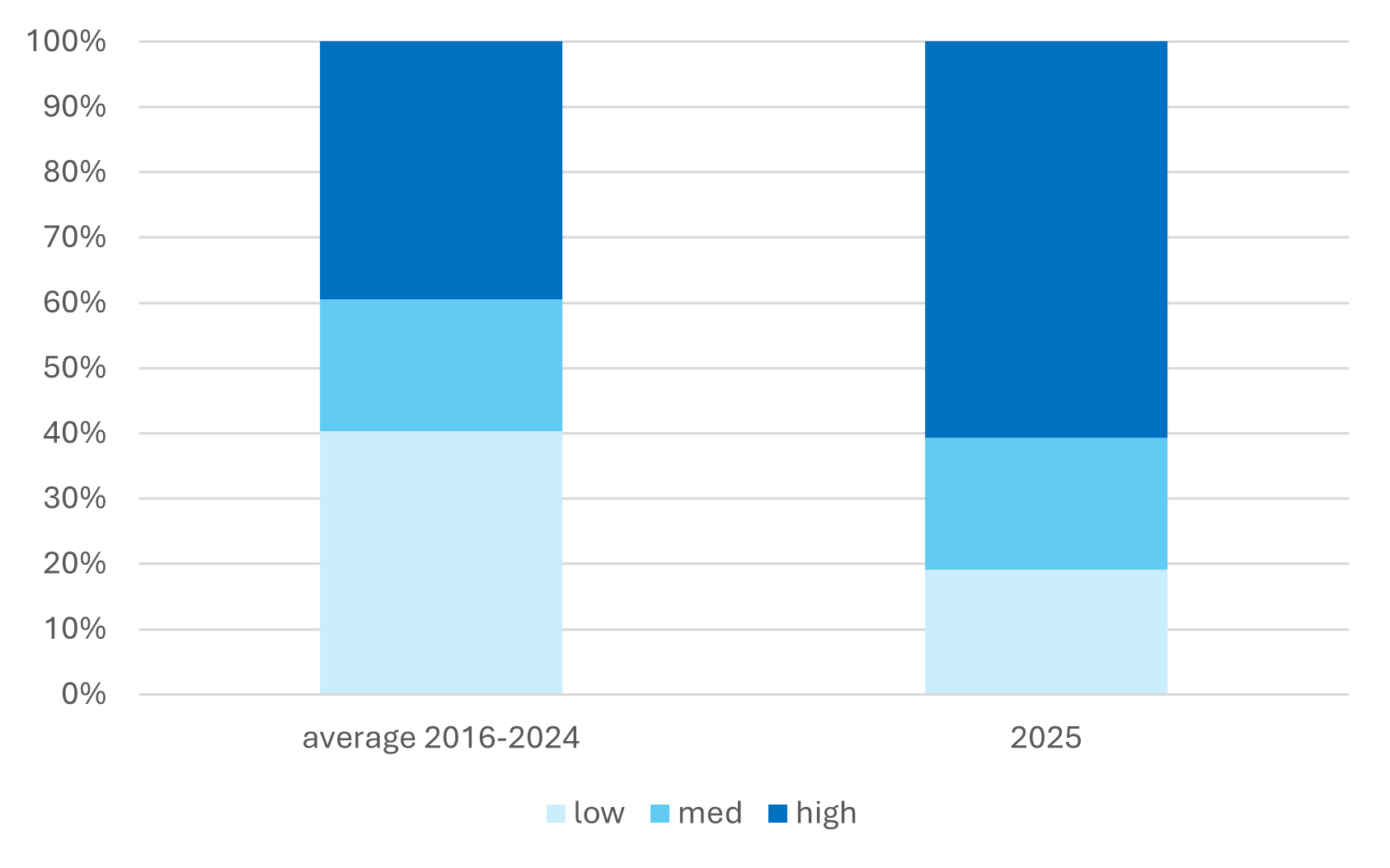
- The percentage of sites with high phosphate levels was substantially higher than the average, with 61% sites sampled having high phosphate in 2025 compared to the average of 40% of sites sampled.
- The percentage of sites with low phosphate was substantially lower with only 19% of sites sampled having low phosphate compared to the 40% average.
- The results indicate that phosphates were still entering or persisting in our watercourses in July and the particularly low river levels probably meant phosphates were more concentrated.
Percentage of sites with high, low or medium phosphate levels each year of RiverBlitz
The average phosphate levels (2016-2024) vs 2025 results
Explore the Data
All results from 2016 to 2025 are available via the RiverBlitz Data Explorer, an interactive online map. This resource allows anyone in the catchment to click on their local watercourse and see if it has had high, medium or low nitrate and phosphate levels during RiverBlitz events, helping communities better understand river health in their area. You can scroll between years to see how nutrient levels have changed from year to year over the ten years of the Bristol Avon RiverBlitz
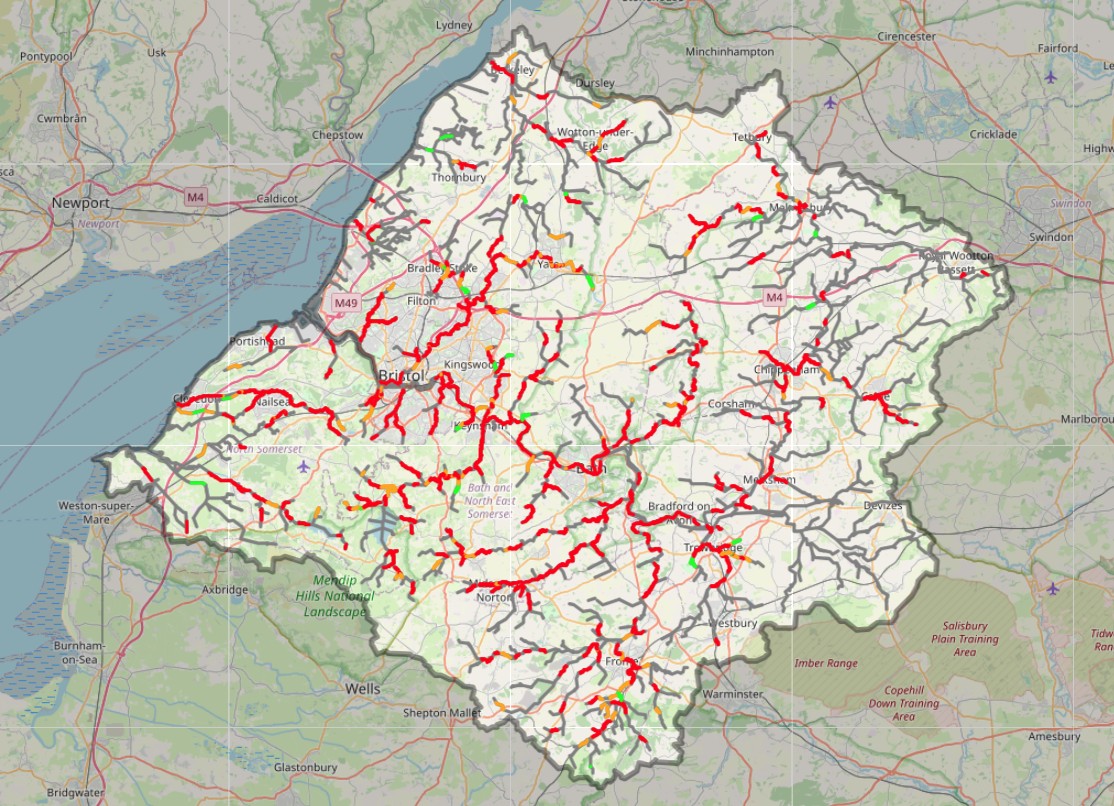
What Influenced the 2025 Results?
Nutrient data can be influenced by a wide range of factors including weather, land use, and river flows. The extreme heat and severe drought conditions during summer 2025 are likely to have affected nutrient concentrations across the catchment. Typically, low flows concentrate pollutants, while short, intense rainfall events can wash nutrients directly into rivers. For the 2025 results, it would seem these conditions meant nitrates were lower, perhaps due to less run-off, and phosphates were higher, probably due to higher concentrations due to less volume of water in our rivers. This contrast between the nutrient types is a fascinating result and emphasizes the importance of sustained monitoring over time.
It is important to note that the results provide a snapshot of nutrient levels in our rivers, with variation in weather conditions and river levels making comparison between years difficult. Also, data is collected using low-cost equipment by citizen scientist volunteers giving a useful broad-brush picture of river health but does not produce reliable fine grain detail. Importantly, RiverBlitz results are only one piece of the puzzle. While nitrate and phosphate are key indicators of water quality, other parameters such as bacterial contamination, chemical pollutants, river habitat, and variation in flow also play vital roles in overall river health.
Community Science in Action
The Bristol Avon RiverBlitz 2025 was a tremendous collective effort, and BART extend our thanks to every volunteer and community member who took part. Volunteer contributions are invaluable and without them BART could not gather this vital data which informs where to direct our efforts in improving river health.
We are already looking forward to RiverBlitz 2026, another opportunity to come together to learn about, monitor, and protect the rivers that flow through our communities.
Thank you to Wessex Water and The Big Give for funding this year’s Bristol Avon RiverBlitz.