Bristol Avon Rivers Trust (BART) is calling for an immediate intervention from both the local authority and the Environment Agency to stop persistent sediment pollution from entering the Hazel Brook from nearby development sites in South Gloucestershire, which has been going on for several years.
Hazel Brook flows into North West Bristol, and through Henbury and Blaise Castle Estate, and is a Site of Nature Conservation Interest. This pollution from South Gloucestershire developments is degrading one of Bristol’s cherished watercourses and undermining years of community-led restoration downstream along the River Trym.
Despite repeated detailed reports from residents, volunteer groups, and BART to both the Environment Agency and the local authority, the pollution continues. Photos and videos captured this week show conditions almost identical to those seen six months ago – stark evidence of a long-standing failure to prevent or address the problem.
Simon Hunter, CEO of Bristol Avon Rivers Trust, said:
“Communities and charities cannot keep being the last line of defence for our rivers. This situation has been allowed to persist for far too long. We are calling for proper enforcement, meaningful intervention, and accountability. With large-scale development accelerating across the region, this must be a turning point – not a warning that goes unheeded.”
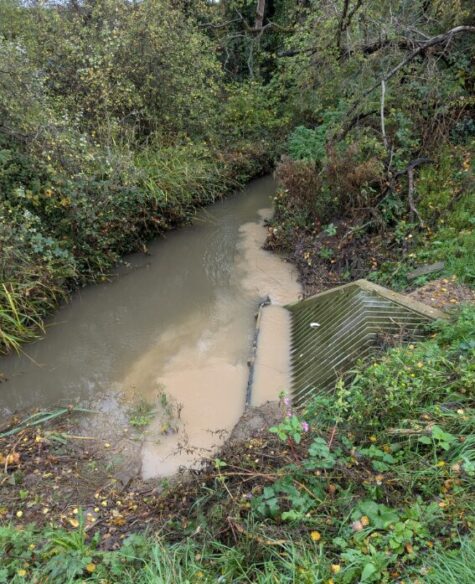
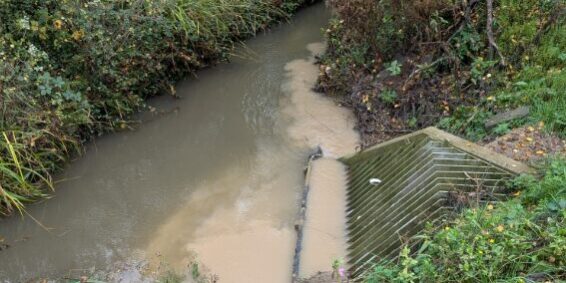
One of several outfalls within 100m, discharging from construction sites in November 2025.
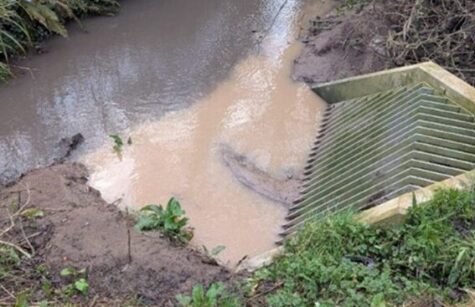
The outfall discharging from the construction site back in January 2025.
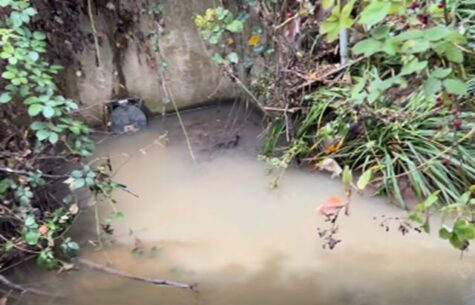
Another outfall discharging from the construction site. Credit: Peter Coleman-Smith, November 2025
Local groups report that the problem has been ongoing since at least 2021, with impacts now visible along a significant stretch of the brook.
A Symptom of a Wider National Problem
This case illustrates a systemic issue affecting rivers nationwide. It is becoming increasingly clear that the regulatory framework around construction-phase environmental protection simply isn’t working. As a country we need to build houses – but we need our builders to be good neighbours for our natural environment. And they can be with a little effort on their part.
Developers are required to produce Construction Environmental Management Plans (CEMPs) and Site Environmental Management Plans (SEMPs). However, local authorities are not carrying out routine compliance checks, meaning that developers are effectively left to “mark their own homework.” This can lead to corners being cut and leaves communities and rivers paying the price.
The Environment Agency, meanwhile, faces significant challenges in pursuing enforcement action. Standard water sampling methods, often limited to snapshots of chemistry, fail to capture the true ecological and physical damage caused by sediment pollution, even when degradation is obvious.
For example, a river habitat survey of the Hazel Brook would clearly show that sections now resemble a silted tidal estuary, with fine sediments smothering the riverbed and habitat loss already well underway. Yet these impacts are not routinely assessed or reflected in formal investigations, leaving damaging discharges to continue – in this case for years.
With the region’s ambitious growth plans, including major new developments, this is likely to be just the first of many similar cases unless the system is reformed.
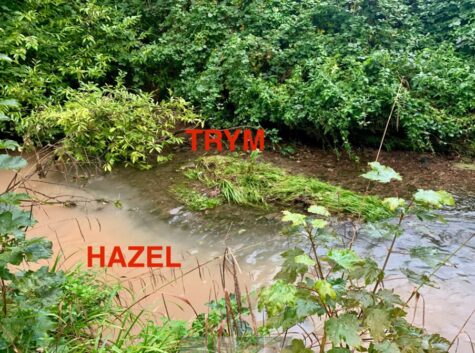
The point at which the Hazel Brook joins with the River Trym at Combe Dingle. Notice the colouration of the Hazel Brook – summer 2025. Credit: Trout in the Trym.
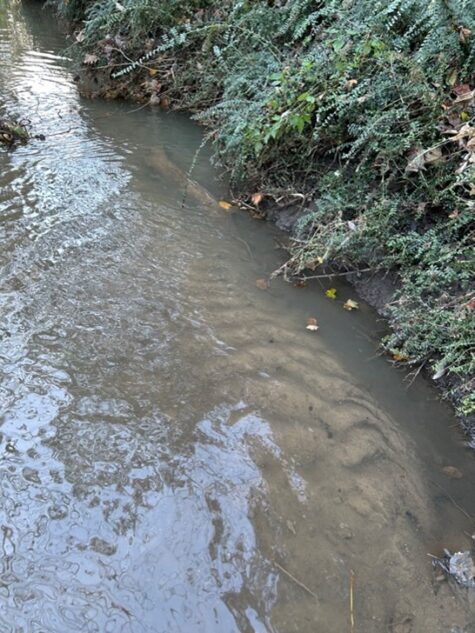
Part of the brook in Blaise Castle Estate which used to have a stony stream-bed. Nov 2025. Credit: Peter Coleman-Smith.
Real Environmental and Community Impacts
Sediment pollution is one of the most widespread yet weakest-regulated threats to UK rivers. It:
- Smothers fish spawning grounds and invertebrate habitats – which has long-term impacts
- Reduces overall water quality
- Alters river shape and function, potentially increasing flood risk
- Undermines years of volunteer-led habitat restoration
- Has significant economic cost for downstream de-silting of locks, harbours and ponds.
Dedicated volunteer groups along the Hazel Brook, Trym and Blaise Estate have spent countless hours improving their local river. Their hard work is now being erased by preventable pollution.
Quotes from Community Partners
Alex Dunn, Chair Sustainable Westbury-on-Trym (SusWoT) and leader of Trout in the Trym:
“In the last 6 years volunteers have spent thousands of hours removing hundreds of tonnes of rubbish from the Trym, its tributaries and surrounding green spaces. For the last 4 years the Environment Agency and local councils have failed to stop silt flowing into the Trym. If we can’t protect the Trym, how can we expect others to protect bigger rivers?”
Alastair Blackwell, Chair, Friends of Blaise:
“The ponds and brook add hugely to Blaise Castle Estate. Our volunteers have put in a lot of effort to remove silt from them. Tonnes of silt have entered the stream, carpeted the bed and almost filled up the entire historic lily pond. This a real slap in the face for them. Surely this should be stopped.”
https://friendsofblaise.co.uk/about-the-friends/
Why This Matters for Bristol and the Wider Region
The Bristol Avon catchment supports species including brown trout, European eel, water vole and otter, wildlife that is highly sensitive to declines in water quality. Sediment and surface-water pollution from construction sites poses a long-term, cumulative threat to these species and to the resilience of the entire river system.
Some local growth plans have already been released, but many detailed proposals are still to come. This makes it essential that planning authorities insist on surface-water and construction-phase management strategies that go beyond tick-box compliance. Development must improve river health, not worsen it.