Article written by Simon Hunter, CEO, Bristol Avon Rivers Trust
We often talk about rivers in terms of water quality and wildlife, but the health of our rivers is fundamentally connected to some of the biggest societal challenges we face, from climate resilience and flood risk to food security and biodiversity loss. The UK Government’s National Security Assessment on global biodiversity loss and ecosystem collapse (UK Government., 2025). makes this connection explicit: declines in biodiversity and ecosystem function are risks to national wellbeing and resilience.
These risks are mirrored globally. The United Nations University Institute for Water, Environment and Health (UNU INWEH, 2022) has warned that the world is approaching a state of “global water bankruptcy”, (UNU INWEH., 2026) where demand for freshwater – driven by population growth, agriculture, and climate change increasingly outstrips sustainable supply.
Water Scarcity and Resilience
In the Southwest of England, changing climatic patterns mean we’re seeing more extreme swings, intense storms and prolonged dry spells. UK Water Resources data (UK Government., 2020) shows that parts of southern England are already under water stress, with some areas experiencing below average river flows for extended periods.
Water scarcity is not just about taps running dry, it threatens the ecosystems that support our water supply, increases pressure on farmers, and reduces the ability of rivers to absorb shocks. Without resilient river systems, the impacts of climate change will ripple through every part of our landscape and economy.
Natural Flood Management and Nature‑Based Solutions
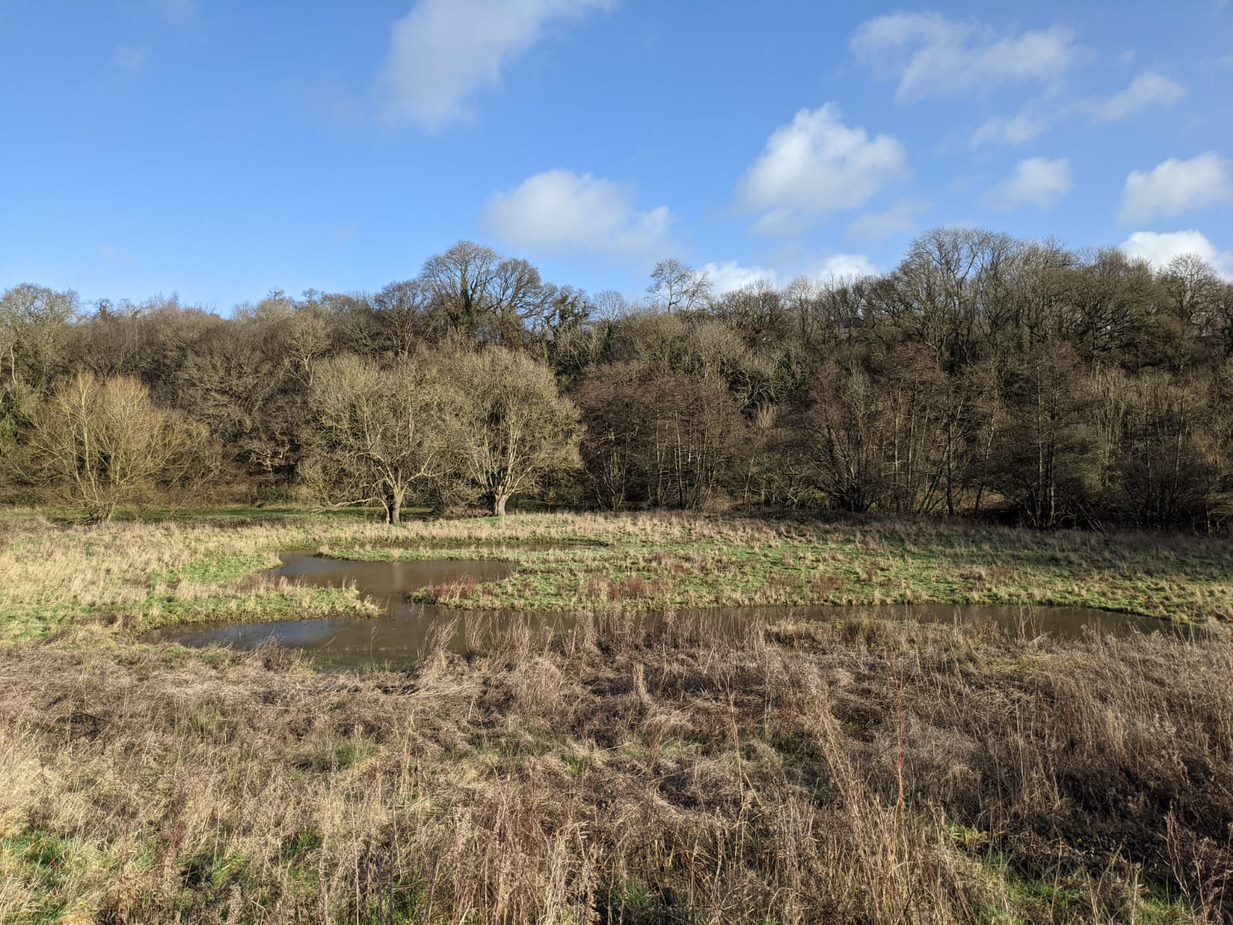
Natural Flood Management (NFM) and broader nature‑based solutions (NBS) are increasingly recognised in UK policy, including the Environment Agency’s Flood and Coastal Erosion Risk Management Strategy (UK Government., 2020) and Defra’s commitment to NBS in the 25 Year Environment Plan (UK Government., 2018). These approaches work with the landscape – using woodlands, wetlands, floodplain reconnection, and soil management to slow, store, and spread water.
NFM doesn’t just reduce flood risk; it builds biodiversity, increases soil health, improves water quality, and supports carbon sequestration, benefits that align with multiple policy goals across Defra and the Environment Agency. It can also form part of a suite of measures to de-risk businesses and their operations into the future, as the climate and weather patterns continues to change.
Biodiversity, Food Production and Security
Rivers are vital to food production. Agriculture depends on reliable water supplies, healthy soils, pollination, nutrient cycling, and habitat diversity – all services underpinned by functioning ecosystems. The National Food Strategy (National Food Strategy., 2021) emphasises that ecological health and productive land use are inseparable.
But biodiversity loss undermines these functions. When rivers are degraded, straightened, polluted, disconnected from their floodplains, the knock‑on effects include less resilient farmland and increased irrigation demand. This is not just an environmental issue; it’s a food security issue.
Why This Matters to BART
At BART, we work across the Bristol Avon catchment because we see rivers as lifelines linking water, people, farms, towns, and nature. BART’s Land Management team works alongside farmers to strengthen farm resilience while enhancing nature recovery and sustaining productive food systems. Farmers are on the frontline of increasingly extreme weather, and they need practical, timely support now more than ever.
Building resilience through NFM and nature‑based solutions isn’t optional – it’s fundamental to supporting food security and healthy communities and landscapes in a changing climate.
The work of our Trust aligns with multiple strands of UK policy, including water resources planning, biodiversity recovery, flood risk management, food security and sustainable land use. The challenge is significant, but so is the opportunity to create an integrated approach. By working together – farmers, communities, regulators, businesses and NGO’s we can build a future where rivers are resilient, landscapes are rich in life, and the services nature provides continue to sustain us.