By Simon Hunter, Chief Executive, Bristol Avon Rivers Trust
The Environment Agency’s decision to declare drought across our region should concern every one of us.
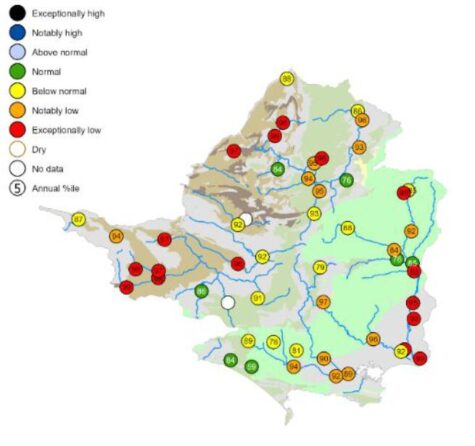
Across England, 78% of rivers are now flowing below normal levels, with many at exceptionally low flows. What makes this particularly striking is that we came out of a relatively wet winter. Yet after just a few weeks of prolonged hot weather, three heatwaves and very little rainfall, our rivers are once again under immense pressure.
This isn’t simply a story about the weather. It is a story about the condition of our landscapes.
For centuries, we’ve altered our river catchments to drain water from the land as quickly as possible. Wetlands have been drained, rivers straightened, floodplains disconnected and fields underdrained. Today, when rain falls, much of it races across the landscape through drains, ditches and engineered channels before reaching the Severn Estuary within hours or days.
A healthy catchment behaves very differently.
Healthy soils, wetlands, peatlands, woodlands and connected floodplains act like natural sponges, storing rainfall for weeks or even months before slowly releasing it into rivers throughout the summer. The same amount of rainfall can produce completely different outcomes depending on the health of the catchment.
This is why drought resilience starts long before the dry weather arrives.
Wildlife is Already Feeling the Impact
Here in the Bristol Avon catchment, we are already seeing the consequences.
Low river flows mean water warms more quickly, dissolved oxygen levels fall and pollutants become more concentrated. Fish species such as salmon, brown trout and eels rely on cool, well-oxygenated water to survive. As conditions deteriorate, they become increasingly stressed, while shallow rivers also create barriers to migration at critical times in their life cycle.
It’s not only fish that suffer.
Our volunteer Riverfly Monitoring Network is providing an early warning of ecological stress across the catchment. Riverflies, including mayflies, stoneflies and caddisflies, are excellent indicators of river health and form the foundation of the freshwater food web.
This summer, four of our Riverfly monitoring sites have been impossible to sample because there was simply no flowing water remaining. A further six monitoring sites have reached trigger levels, meaning the abundance of sensitive invertebrate species has fallen below expected thresholds.
These declines matter. Riverflies provide food for fish, birds, bats and many other species. When the base of the food web begins to fail, the effects ripple throughout the entire ecosystem.
We Know What Works
The encouraging news is that we already know many of the solutions.
Restoring wetlands, reconnecting floodplains, re-meandering rivers where appropriate, improving soil health, creating nature-based solutions and planting trees in the right locations all help to slow the movement of water through the landscape. These measures increase groundwater recharge, reduce flood risk and sustain river flows during prolonged dry periods.
Nature-based solutions are not simply good for wildlife, they are essential infrastructure for climate resilience.
A National Investment in Healthy Catchments
If we are serious about adapting to a changing climate, healthy river catchments must be recognised as critical national infrastructure.
Government has an opportunity to accelerate this transition by providing long-term investment in catchment restoration, strengthening environmental regulation, ensuring abstraction licences are fit for a changing climate, and modernising ageing water infrastructure. Restoring our rivers is not just an environmental ambition. It is an investment in water security, food production, flood resilience, biodiversity, public health and economic prosperity.
The drought we are experiencing today is unlikely to be an isolated event. Climate projections suggest periods of prolonged drought, punctuated by more intense rainfall, will become increasingly common.
The question is no longer whether we need more resilient river catchments. It is whether we are prepared to invest in them before the next drought arrives.
The science is clear, the solutions exist, and the need has never been greater. Now is the time to act.